How to paint or stain a new fence.
That's the answer. Below is why, and the parts most people get wrong.
How long should you wait before staining a new fence?
Four to six weeks for treated pine, in most conditions.
Treated pine leaves the treatment plant wet. The preservative is driven into the boards under pressure using water as the carrier, and a lot of that water is still in the timber when it arrives at your place. Coat it while it's saturated and the finish can't penetrate — the pores are already full — and whatever moisture is left is sealed in behind a film.
You get blotchy colour, poor adhesion, and a coating that lifts within a season. At that point you're not recoating a fence, you're stripping one, across sixty-odd palings, by hand.
There's a second reason. Timber that comes off the saw smooth has a compressed, resin-sealed surface — mill glaze — that repels finish. A few weeks of sun and rain opens it up.
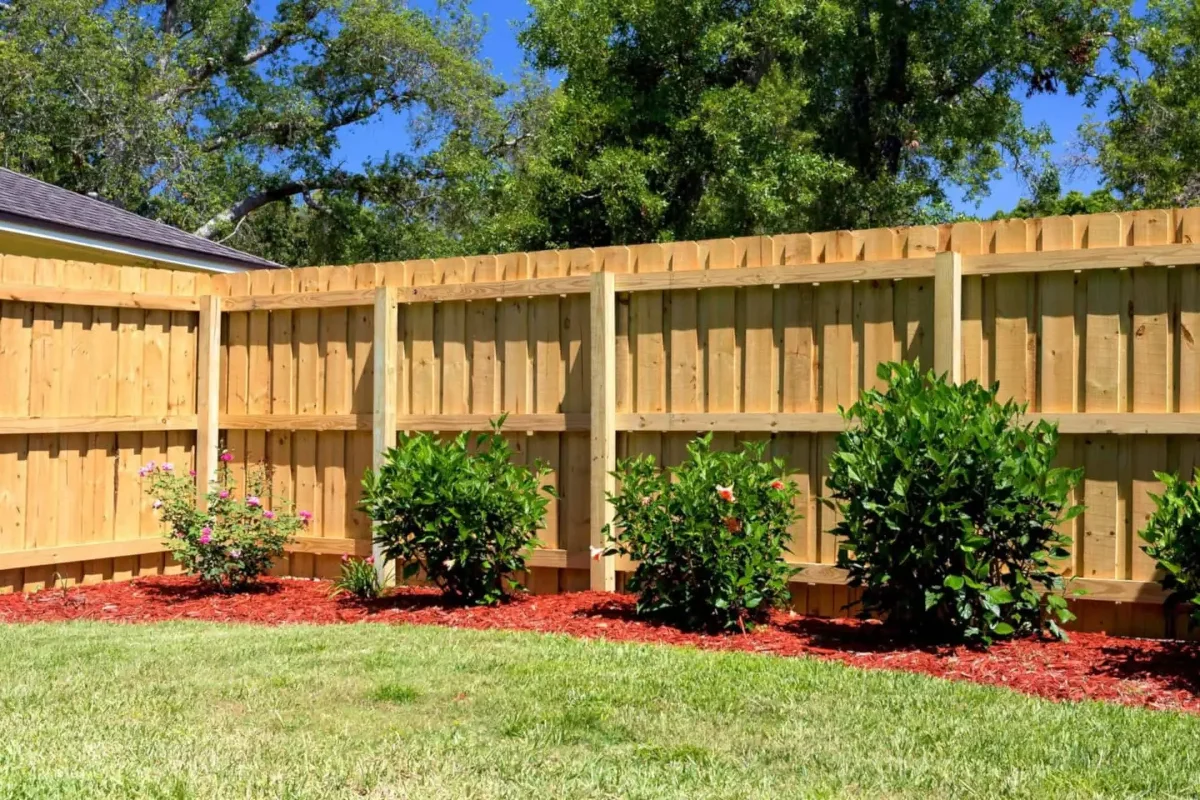
How do you know when the fence is ready to stain?
Don't count days. Test it.
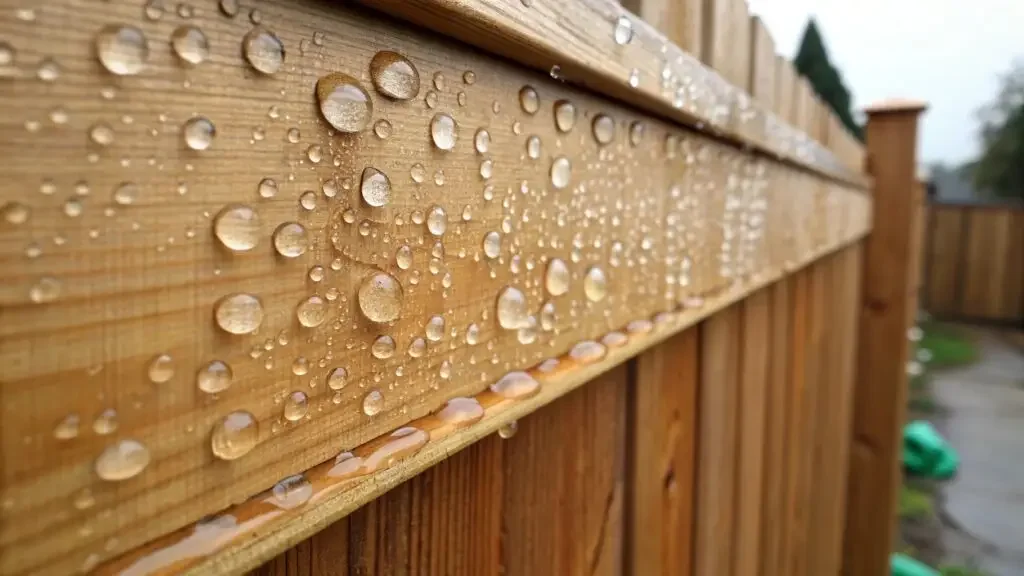
Flick a few drops of water onto the boards. If the water beads and sits on the surface, the timber is still too wet or too glazed — leave it longer. If the drops soak in and darken the timber within about thirty seconds, you're ready to coat.
Test three or four spots, not one, and test both faces. The shaded southern side of a fence can be weeks behind the sunny side, and it's the one people forget to check.
Can you stain a new fence straight away?
Yes, if you use a new-timber preparation product.
Most coating brands sell one. It's a scrub-on product that strips mill glaze and surface moisture so you can coat immediately instead of waiting out the weathering period — Cabot's, for example, specifies exactly this as the alternative to the standard four to six weeks.
It's a real shortcut, not a cheat. It also means buying an extra product and wet-scrubbing the whole fence, so it's worth doing if you've got people coming over and it isn't worth doing if you can just wait a month.
Does the timber type change the answer?
Yes, and this is where most generic advice falls over.
Treated pine is the four-to-six-week case above, and it's what most Melbourne paling fences are built from.
Hardwood — merbau, jarrah, spotted gum — doesn't carry the treatment moisture, but it does bleed tannin. Give it a few weeks of weather and a wash before coating, and know that the run-off will stain pale concrete, render and pavers on its way down. Hose it off the same day.
Cypress is naturally durable and doesn't need a coating to last. If you coat it, you're doing it for the look, and leaving it bare to silver off is a perfectly good decision.
Not sure what you've got? Ask whoever installed it. It's a ten-second answer and it changes what you buy.
Should you use oil, stain or paint on a fence?
This is the decision that actually matters, and it's less about colour than about what happens in year five.
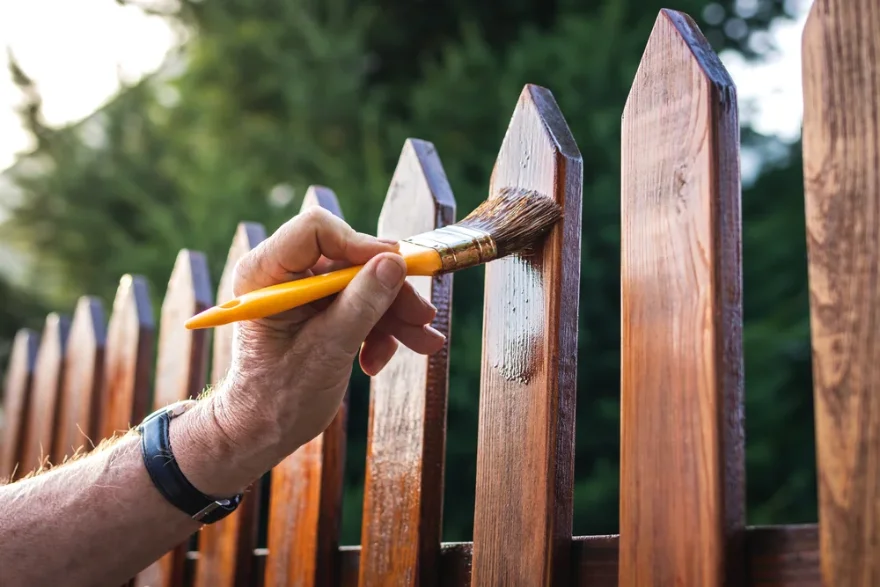
Penetrating oils and stains soak into the timber instead of sitting on top of it. They fade rather than fail. When they wear out you wash the fence and put more on — no sanding, no stripping. The trade-off is doing it more often.
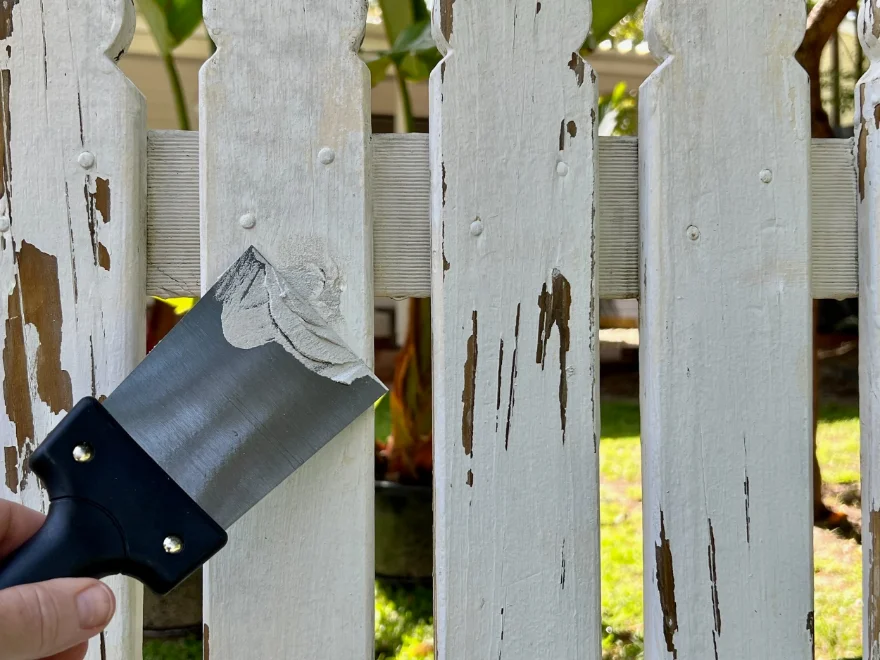
Paint and other film-forming coatings last longer up front and give you any colour you like. But they sit on the surface, and when a film coating fails it doesn't fade quietly — it peels. Recoating then means stripping back to bare timber across every single paling.
On a standard paling fence, use an oil or a stain. The maintenance is a Saturday with a broom and a brush instead of a week with a sander. Save paint for front fences and pickets, where the finish justifies the future work.
Do you need to stain both sides of a fence?
Coat your side at minimum. A fence sealed on one face and bare on the other dries unevenly and is more likely to cup.
If it's a boundary fence, the other face belongs to your neighbour, so have the conversation before you start rather than after. Most neighbours will go halves on the product if you're supplying the labour, and it adds about an hour to a job you're already standing in front of.
How much stain do you need for a fence?
Coverage runs around 12 square metres per litre on dressed timber and less on rough sawn — a first coat on thirsty new pine can drink close to double.
For a standard 1.95m high fence, two coats, both sides:
Halve those figures if you're only doing one side. Buy toward the top of the range — running out halfway along leaves a visible join and costs you a second trip.
When is the best time to stain a fence in Melbourne?
Coatings have a working range, usually 10°C to 35°C. That rules out most Melbourne winter mornings and the worst of a January afternoon, which leaves October through April and the cooler ends of those days.
Three things to avoid:
Rain forecast within 24 to 48 hours
Direct hot sun, which flashes the carrier off before the finish can penetrate and leaves a patchy surface
Starting so late in the day that dew settles on a wet coat
The practical version: begin on the shaded side in the morning and follow the sun around the house.
How to stain a fence, step by step
How often should you recoat a fence?
Don't work to a calendar. Work to the water test.
Once a year, flick water at the fence. When it stops beading and starts soaking straight in, the coating is spent. On a Melbourne fence that's typically two to four years for an oil, longer for a good film coating on a sheltered aspect. North and west-facing sections always go first.
Five mistakes that cost people a fence
Coating timber that's still wet. Coating over dust, cobwebs or mould. Coating in direct hot sun. Buying too little and joining mid-run. And mixing brands within a single coating system.
Frequently asked questions
{{ f.q }}
Built by Boundary Co.
We build fences across Greater Melbourne. We don't coat them — coating has its own weather window and its own product warranties, and it's better done by you a month after we've left, or by a painter who does it every day.
What we do is tell you exactly what timber went into your fence and what it needs, so whoever picks up the brush isn't guessing.
GET A QUOTE →Timing, coats, temperature range and coverage figures in this guide are drawn from published Australian coating manufacturer data. Products differ — always follow the instructions on the tin you buy, and stay within one brand's system from preparation to topcoat.